

A poster on cream paper of a young researcher in glasses and a green jacket and a white robot at a work table, both leaning in to look at one sheet with a red mark through a large desk magnifier. The robot steadies the sheet; she holds a pencil, ready to mark it.

Release notes · week of 26 October

What we shipped this week:stricter verdicts, more control over fix PRs

A product manager at Arvion

· 1 min read

Two groups of changes went out this week. The first makes Arvion stricter about when it says a vulnerability can or can't be exploited in your code. The second gives your team more control over the pull requests Arvion opens.

Exploitability verdicts

A verdict now has to be backed by code Arvion extracted from your project. Knowing that you use a vulnerable version of a package isn't enough on its own: the verdict points at the code it's based on, so you can check our reasoning instead of taking it on trust.

CVEs in CISA's Known Exploited Vulnerabilities catalog now always get a second review before we report a verdict on them. These are the bugs attackers are already using, so a wrong "not exploitable" costs the most there.
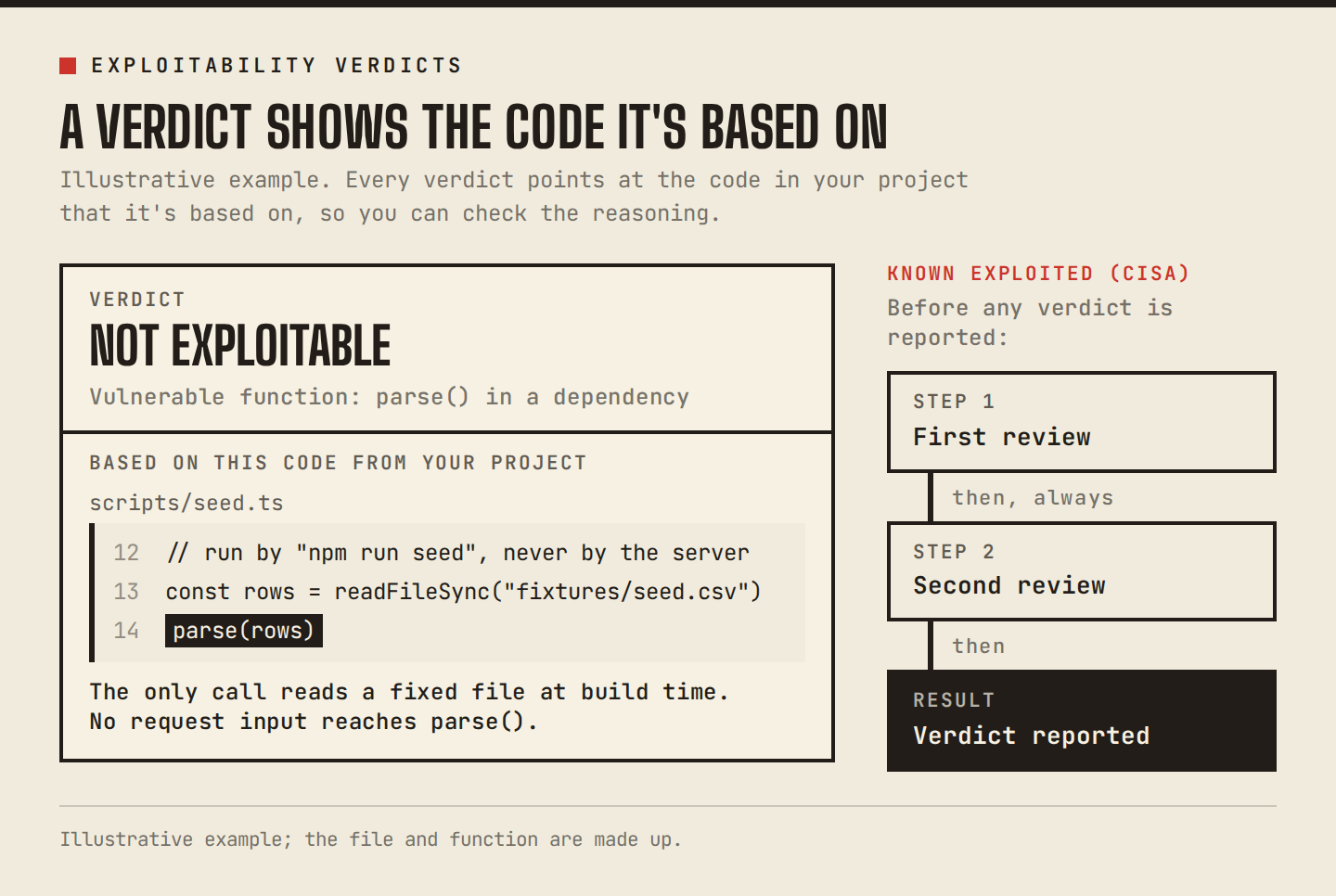
Illustrative verdict card: Not exploitable, for a vulnerable parse() function in a dependency, based on code from the project. In scripts/seed.ts, line 14 calls parse() on a fixed file at build time, so no request input reaches it. Beside it, for CVEs on CISA's Known Exploited list: a first review, then always a second review, then the verdict is reported.

We also changed what happens when part of your code wasn't analyzed. Until now, a project with code paths Arvion couldn't follow could still come back clean. Those paths are now reported as not analyzed, and the project doesn't get a clean result while they're open. "Clean" should mean we looked, and "we couldn't tell" should look different from "not exploitable".
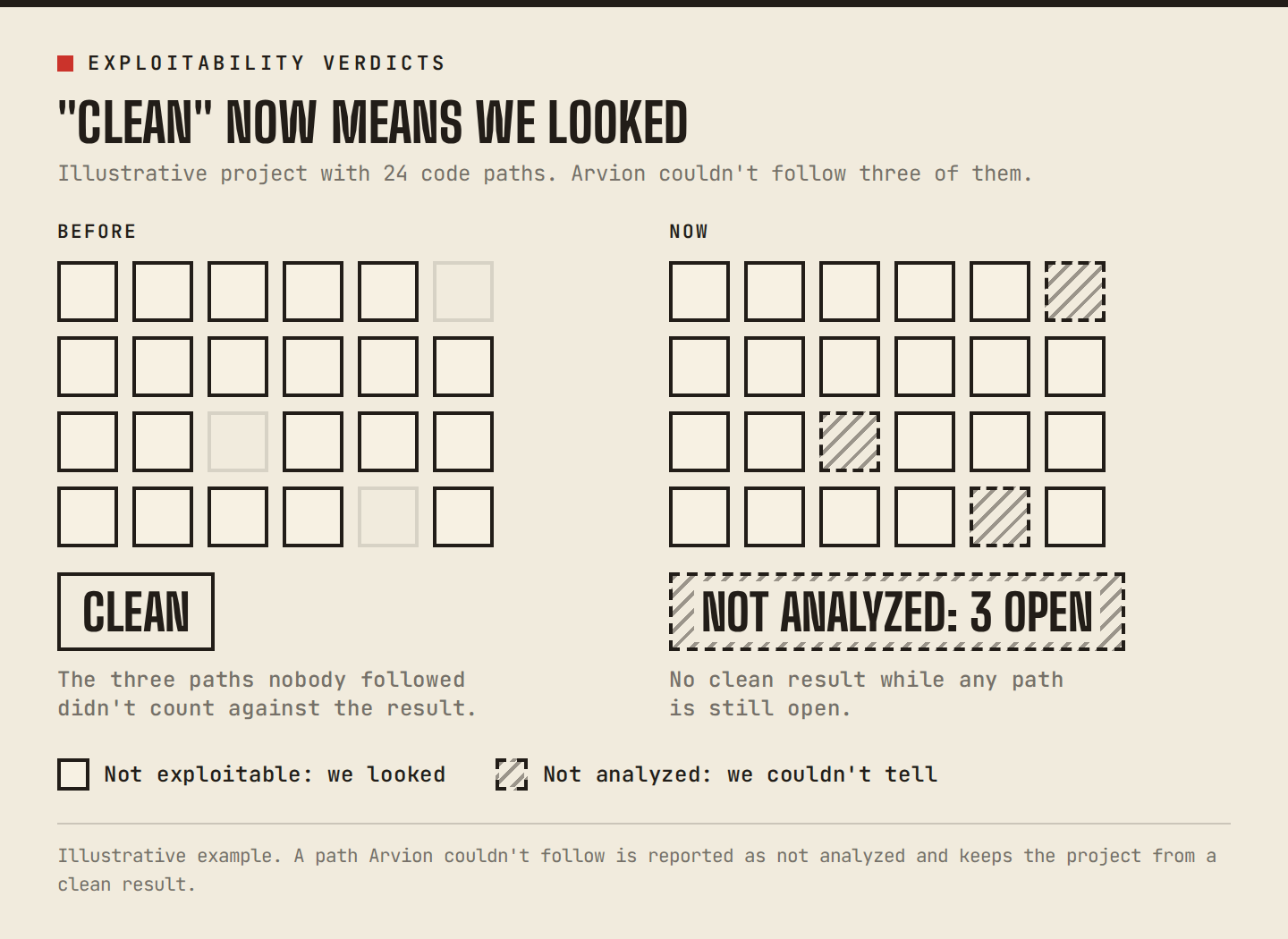
Two grids of the same 24 code paths in an illustrative project. Before: three paths Arvion couldn't follow were left blank and the project still came back Clean. Now: those three are hatched as not analyzed, and the result reads Not analyzed: 3 open. Legend: a solid outline means not exploitable, we looked; hatching means not analyzed, we couldn't tell.

Fix pull requests

The same kind of fix often shows up in many places at once. Arvion groups these into fix families, and you can now act on a whole family in one step instead of going through the fixes one by one.

Arvion can now open its fixes as draft pull requests, and a draft doesn't move forward until someone on your team explicitly approves it.

A poster on cream paper: at a drafting table, a white robot slides a sheet with a red corner and a green bar toward a young researcher in glasses and a green jacket. She holds a green stamp just above it, reading the sheet before she approves it.

Dependency upgrade pull requests now include the evidence from the test run in their description. The reviewer sees how the upgrade did in your tests before reading the diff.
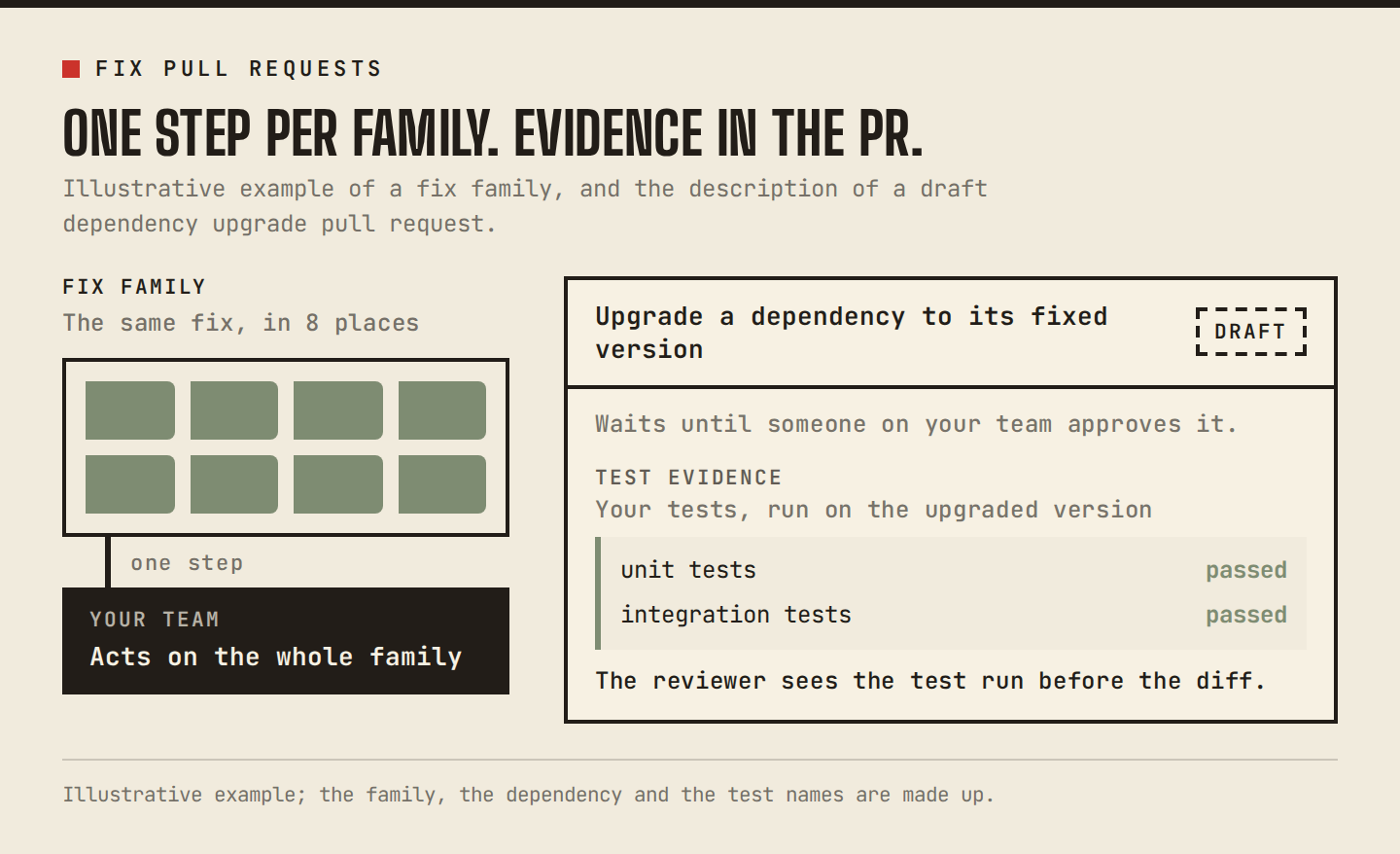
Illustrative fix family: the same fix in 8 places, which your team acts on in one step. Beside it, a draft dependency upgrade pull request that waits until someone on your team approves it, with test evidence in its description: unit tests passed, integration tests passed.

See it on your own code

To see the verdicts and fix pull requests on one of your own repositories, book 15 minutes with the Arvion team.

Book 15 min